
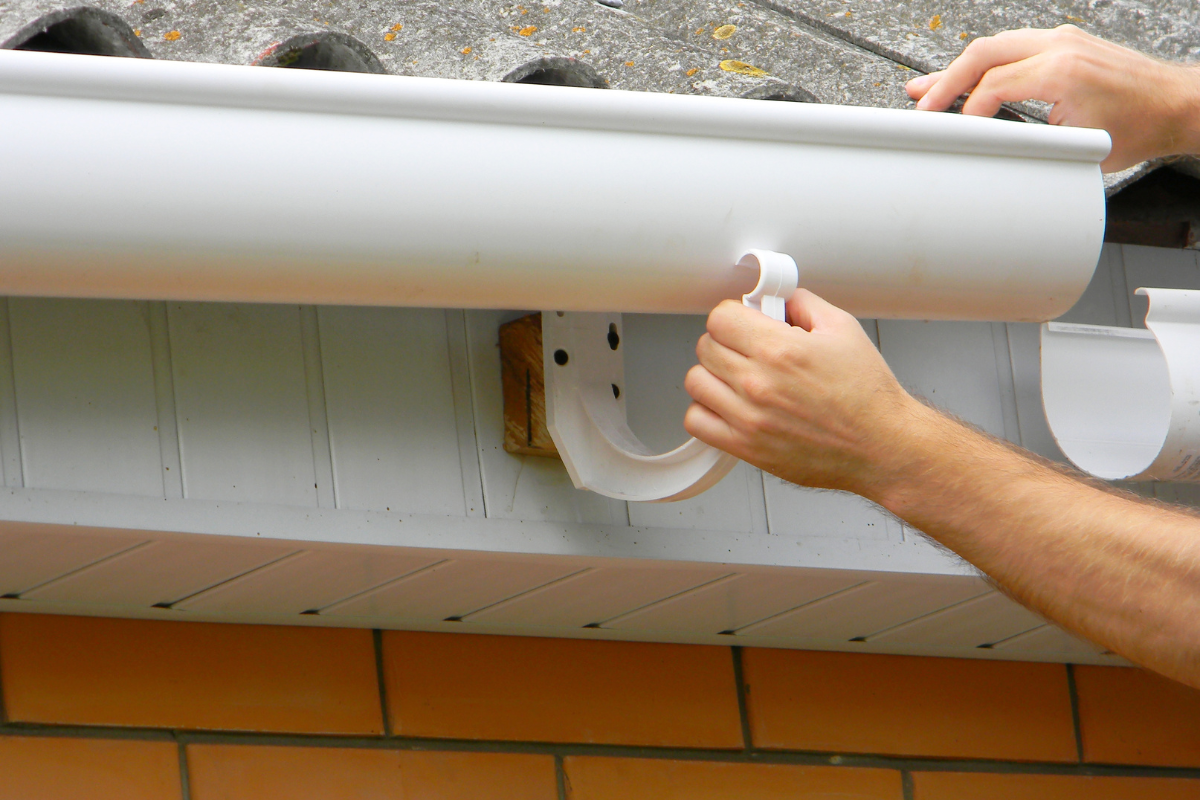
Water is both a house’s best friend and its most persistent threat. Handled properly, it keeps landscapes green and basements dry. Managed poorly, it creeps into framing, saturates soils, and stresses concrete until cracks spider out. Gutters sit at that crossroads. When they work, they quietly move thousands of gallons away from the foundation every year. When they fail, the repair bill rarely stops with a downspout. It reaches slab heaving, bowed walls, mold remediation, and landscaping that never quite recovers.
I’ve walked more than a few properties after a heavy storm, boots sinking near the eaves, downspout elbows lying in the grass. The pattern repeats: gutters clogged or undersized, joints leaking at the corners, and water pooling where the soil already slopes toward the house. Owners tend to notice only once the drywall stains or the basement smells like a swimming pool. By then, the damage is underway. Professional gutter services don’t just install aluminum troughs. They diagnose water behavior around a structure, then tune the system so the ground near the foundation stays stable year round.
How gutter performance ties directly to foundation health
A foundation wants two basic things: consistent loading and consistent moisture. Soil that cycles between saturated and bone dry changes volume. Clays swell as they take on water and shrink when they release it. Sandy soils drain quickly but erode if the flow is concentrated. If your gutters dump water along the perimeter, you create a narrow band of over-saturation. That band expands and contracts out of sync with the rest of the yard, which torques the footing and slab. Over years, you see hairline cracks widen, doors go out of square, and floors slope just enough that marbles find the same corner.
Good gutters reduce the volume and velocity of water at the base of the home. They collect the rainfall from the entire roof surface and redirect it safely away, often 5 to 10 feet from the foundation or directly into site drainage. The math surprises people: a 2,000 square foot roof in a one-inch storm sheds more than 1,200 gallons. Stretch that across a wet spring and even small failures at the eaves add up to a bathtub’s worth of water against the house every few days.
Why professional design beats piecemeal fixes
Most homeowners think about gutters in terms of cleaning and leaks. Professionals start with a bigger frame. They look at roof area and pitch, local rainfall intensity, and how the yard actually drains. The size and shape of the gutters, the number and placement of downspouts, and the discharge locations all matter.
An example from a Cape built in the 1960s: the front roof had a steep pitch with a relatively short run. A previous owner hung five-inch K-style gutters with a single downspout at the corner. During hard summer storms, water overtopped the gutter near the entry, splashed against the brick stoop, and pooled at the foundation where a hairline crack already existed. A gutter crew reworked the run to six-inch K-style, added a second downspout mid-run to halve the flow, and tied both downspouts into a PVC line that daylights at the curb. That small set of decisions, grounded in flow rates rather than only aesthetics, ended the pooling. No amount of caulk under the old setup would have fixed the underlying hydraulic problem.
Sizing choices are rarely arbitrary. In regions that see frequent cloudbursts, a six-inch gutter with three-by-four-inch downspouts gives meaningful margin against overflow. On low-slope roofs or where valleys concentrate water, oversized outlets prevent the choke point effect you get with small drop outlets. A professional will also match hanger type and spacing to snow load and anticipated debris. A gutter that sags even half an inch along a 40-foot run holds water, and standing water accelerates corrosion, invites mosquitoes, and stresses fasteners. Those sags are the weak spots that release water right where you least want it.
Maintenance, but the kind that prevents surprises
Gutter maintenance is an unglamorous chore, the kind that slips down the list until a storm forces the issue. Pros bring two advantages: they spot early failure signs that don’t show from the ground, and they treat the system as part of the entire water management plan rather than a separate accessory.
On a typical service visit, a technician clears debris, checks pitch with a level, tightens hangers, reseals miters, and tests downspout flow. They’ll also look for fascia rot or loose drip edge, both of which create hidden pathways for water. That slow seep behind a miter joint doesn’t look like much, but over a season it soaks the framing where the rafters meet the wall. I’ve seen paint that looks slightly chalky along a soffit hide saturated plywood.
The cadence matters. In leafy neighborhoods, twice-a-year gutter maintenance is a minimum. Homes under pines often need quarterly service because needles mat together and form dams. Fresh construction debris near new builds can clog gutters in weeks. A professional service will adjust the schedule to the site rather than default to a one-size-fits-all plan.
Guards, screens, and the honest trade-offs
Gutter guards spark strong opinions. Some manufacturers promise a set-it-and-forget-it solution. Reality sits somewhere in the middle. Micro-mesh guards do a good job shedding leaves and shingle grit, especially when installed with a slight pitch that matches the roof. They still need periodic brushing and flushing, and in heavy pollen seasons the surface film can reduce flow until rinsed. Surface-tension covers handle broad leaves well, but in driving rain the water sometimes skims past the lip, especially on steep pitches or where valleys feed into a short run.
A good installer matches guard type to tree species, roof pitch, and local weather. They also manage expectations. Guards reduce the frequency and labor of cleaning, they do not eliminate maintenance. Pick the wrong guard for a site and you can create a new failure mode: ice sheets flushing off a cover and yanking the entire system loose, or debris wedged at the valleys feeding water right over the trough. Guard selection becomes part of gutter services, not an upsell. Done thoughtfully, guards protect the investment and keep water moving during the storms that matter most.
When gutter repair is smarter than replacement, and when it isn’t
Not every leaky corner demands new metal. Aluminum gutters often fail at joints long before the material itself is spent. Common repair targets include miter leaks, loose outlets, crushed elbows, and missing end caps. High-quality sealants, proper surface prep, and reinforced hangers extend life several seasons. If the run holds proper pitch and the paint still bonds, gutter repair makes sense and protects the budget for other upgrades like downspout extensions or drainage tie-ins.
Replacement becomes the right call once you see chronic sagging, widespread oxidation, or seams every 10 feet that leak after repeated attempts to reseal. Older spike-and-ferrule systems often loosen as wood swells and contracts, and the spikes rarely go back into the same hole with full holding power. Switching to hidden hangers with structural screws gives a fresh mechanical base. For long, uninterrupted runs, seamless gutters fabricated on site remove dozens of potential leak points. On homes with complex rooflines that dump into short gutter sections, stepping up to six-inch profiles with oversized outlets can prevent the cycle of overflow and fascia damage. Experienced crews know where to draw that line, and they explain it in terms of risk reduction, not only aesthetics.
Downspout strategy: the quiet foundation protector
Downspouts live in the background until they’re missing. Then their absence is loud. A well-designed system uses downspouts to divide and conquer the water load, then sends it somewhere that won’t harm the structure.
Count and placement come first. Long runs benefit from two outlets so water doesn’t race to one end, overtop, and sheet down the siding. Where a valley concentrates flow, a dedicated downspout near that junction prevents overflow in cloudbursts. Then comes routing. An elbow that dumps into a mulched bed next to a basement wall invites trouble. Extending that discharge across the walkway with a low-profile channel drain or underground to a pop-up emitter keeps the area near the footing dry.
Material choice and sizing matter more than most homeowners realize. A two-by-three-inch downspout is easy to clog with a small clump of maple seeds. Stepping up to three-by-four-inch outlets improves resilience in storms. Corrugated black extensions are cheap and effective, but they crush under lawn equipment and clog with silt. Rigid PVC, properly sloped and with cleanouts, requires a little more upfront work and pays you back with predictable performance. If your site slopes toward the street, daylighting the line with a curb cut or pop-up is a clean solution. On flat lots, downspouts may need to discharge into a French drain or dry well sized to the roof area. A professional will calculate volume and soil percolation rates rather than guessing.
Soil, slope, and the often-missed interface between gutters and grade
Even perfect gutters fail if the ground invites water back to the house. I’ve stepped off ladders onto lawns that slope like a shallow saucer toward the foundation. The gutters did their job, then the grade undid it. Gutter services that view the system holistically include quick grading checks. You want at least six inches of fall within the first ten feet away from the foundation where possible. In tight urban lots, that may not be feasible, which raises the stakes for downspout extensions and underground conveyance.
Different soils behave differently under the same discharge. Clay holds water, so it saturates and presses against basement walls. https://stephenvnhi933.timeforchangecounselling.com/avoiding-ice-dams-with-proper-gutter-repair-and-maintenance Sandy loam drains well but erodes if flow concentrates from a high roof valley. Professionals will sometimes recommend splash blocks only as a temporary measure, then move to solid extensions or drain connections. They know that mulch floats and migrates. Decorative river rock looks tidy under a downspout, but if water falls six inches onto it, the splashback wets the siding and the foundation line all the same.
Landscaping details can work for or against you. Edging that creates a shallow trough next to the foundation will collect runoff. Raised beds that overtop the sill plate trap moisture. A routine gutter maintenance visit is a good time to flag those issues. It’s cheaper to cut a small swale that guides water across the yard than to inject epoxy into a growing foundation crack later.
Seasonal stresses that test a gutter system
Gutters lead a tough life across the seasons. In northern climates, freeze-thaw cycles find every weakness. Meltwater from a sun-warmed roof refreezes at cold eaves and builds ice dams. While insulation and ventilation are the primary remedies, gutters and guards influence the severity.%